Everyone’s talking about AI coding assistants, but most developers are stuck in ‘vibe coding‘, hoping the AI will figure things out while they watch.
The result? Inconsistent quality, loss of control, and the nagging feeling that you’re not really leveraging AI’s full potential.
The Agentic Developer Workshop with Marco Heimeshoff takes you from passive prompt-hoping to deliberate agentic engineering. The focus is harness engineering: designing the whole system around the model (context, skills, agents, hooks, memory and workflows) so it produces reliable work, stays inside your token budget and keeps working as models and tools change.
In four online sessions you’ll go from your first CLAUDE.md to structured multi-agent workflows. You’ll build skills and agents, orchestrate subagents, keep your context window clean, use hooks as deterministic safety rails and give your agents a memory.
What makes this different? You’re learning from a Domain-Driven Design expert who brings 15+ years of experience helping developers at various Fortune 500 and hundreds of other organizations tackle complex domains.
This isn’t generic AI tips – it’s a craftsperson-to-craftsperson transfer of hard-won knowledge about governing complexity in AI-augmented development.
You’ll leave with a working agentic workflow for your own projects and the principles behind it, so you can adapt as the landscape evolves.
This is an online workshop. If you want to enjoy the vibe of an in-person workshop, you may want to check out The Agentic Developer Masterclass in Berlin!
Learning Objectives
By the end of this workshop, you will:
- Set up the anatomy of an agentic development environment: CLAUDE.md, rules, skills, agents, commands and plugins, and how they compose into a harness.
- Choose between skills and agents, and between forked and clean subagents, knowing what each costs in context and tokens.
- Design multi-agent workflows (plan, divide into tasks, orchestrate implementation, review, document) with clean handoffs between agents.
- Fight context rot and keep your context window lean.
- Use hooks as deterministic safety rails: formatting, linting, tests and guards against dangerous actions.
- Give your agents a memory that separates domain knowledge, architectural knowledge and what the agent learns by itself, and turn failures into guardrails.
- Decide when to use MCP servers and when a CLI tool or a script does the job better.
- Master the cadence between thinking and coding, and apply domain modelling to your work with AI as the collaborative role-playing game it truly is.
- Build self-improving tools through skill-creator skills and meta-optimization.
The Trainer
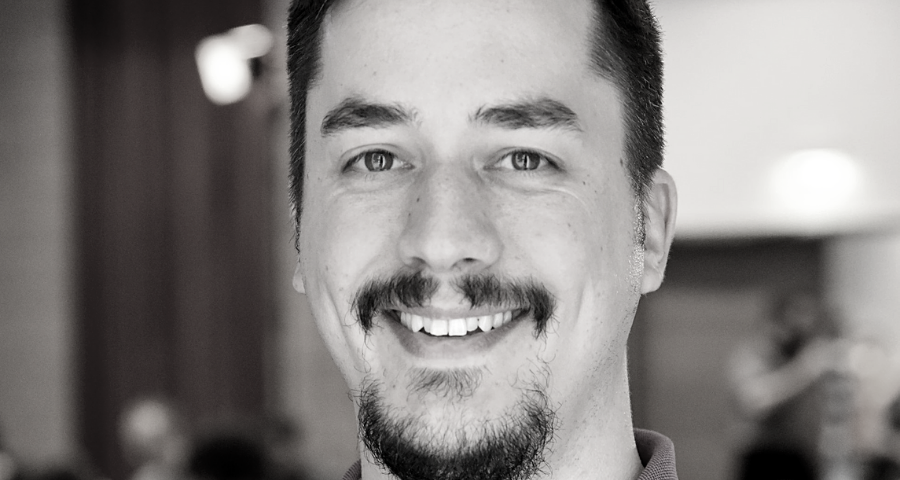
Marco Heimeshoff is a Software developer, Domain-Driven Design trainer, coach, and consultant who has worked with organizations ranging from Intuit, Lego, Mercedes, Spotify, and Starbucks to hundreds of smaller companies.
Marco co-founded the KanDDDinsky conference and VirtualDDD.com.
His development philosophy centers on lifelong learning, focus on language, and empathy.
Target Audience
The Agentic Developer Workshop helps senior developers and tech leads alike. We go from AI zero to competent.
Ideal for:
- Senior developers looking to multiply their productivity systematically without sacrificing code quality.
- Tech leads designing AI-augmented workflows for their teams, and wondering how to go from “it works for me” to “it works for the team”.
- Individual contributors who want to achieve “one-person company” leverage.
- Teams and organizations looking to introduce AI into development without creating chaos, inconsistency, or technical debt.
- Anyone working in software development, regardless of tech stack.
Prerequisites?
None for AI knowledge – this workshop starts from zero and builds to competent.
Topics
- Going beyond the hype: vibe coding vs agentic engineering
- The anatomy of Claude Code and the architecture of a harness
- Agentic workflows and multi-agent patterns
- Context, hooks and memory
- Scaling and evolution: from your setup to your team.
Agenda
Session 1 – Foundations & Architecture
- The vibe coding problem and going beyond the hype
- Interactive diagnosis: where are you on the AI adoption spectrum?
- Anatomy of Claude Code: CLAUDE.md, rules and how context gets loaded
- The harness: the system you build around the model, and why mature harness work is pruning work
- What the agent knows, what you know, and what nobody sees coming: turning failures into guardrails
- Homework: create your own workflow with skills, agents and CLAUDE.md in your own codebase.
Session 2 – The Configuration Hierarchy
- Sharing and reviewing your homework workflows
- From a backlog item to working code: Socratic dialogue, plan, tasks, orchestration, review, documentation
- Forked vs clean subagents
- Agent frameworks (BMAD, GSD and others) read against your own harness
- Exercise: write an agentic workflow that uses parallel work, intervening only where it really matters.
Session 3 – Master the Model
- Why multiple agents, and the hardest part: handoffs
- Working patterns: orchestration, communication approaches, the debate
- Context window optimization with research indexes and bounded contexts
- Hooks: deterministic vs heuristic, and how to wire them correctly
- Memory systems: domain, architectural and self-referential knowledge
- Agent teams vs subagents, MCP vs CLI
- Choosing together the topics for the last session.
Session 4 – Meta-Optimization
- Integrating agents with team workflows
- Hooks for QA and security
- Big rewrites with AI: what stays a human responsibility and what you can hand to the agent
- Local LLMs and open harnesses
- UI design with agents
- Your working setup.
How it works
This four-half-day workshop follows a craftsperson-to-craftsperson approach. We balance theory with immediate practice, ensuring you’re never just watching – you’re doing.
The rhythm of each session:
- Concept introduction – Understanding the principle and why it matters
- Live demonstration – Seeing the technique in action
- Hands-on practice – Applying it yourself with guidance
- Reflection & questions – Consolidating learning
- Homework.
Homework matters: between sessions you’ll build your own workflow on your own codebase (company or hobby project), and we’ll look at it together in the next session. Block some time in your calendar between sessions to work on it: it’s where most of the learning happens.
Final Challenge: in the last session, you’ll design and begin implementing your personal agentic development workflow, a system tailored to your projects, tech stack, and working style. You’ll leave with something immediately applicable, not just theoretical knowledge.
Post-Workshop Support: access to a community channel for questions and continued learning, plus a comprehensive reference guide of all patterns and techniques covered.