Contemporary software engineering discourse often frames the concept of a Platform in terms of continuous integration pipelines or internal developer tools. This perspective tends to focus heavily on the “flow” of “value” through a Development Lifecycle.
Platform design initiatives standardize the development lifecycle by codifying organizational best practices and compliance into automated, self-service “Golden Paths” in an attempt to abstract infrastructure complexity.
Optimizing delivery mechanics alone often leaves operational complexity unresolved. To enhance systemic flow, systems architects need to pivot their attention from artifact delivery toward the Operational Lifecycle.
We can identify two dimensions: the layers of a system (Application, Platform, and Infrastructure), and the lifecycles (Development and Operation).
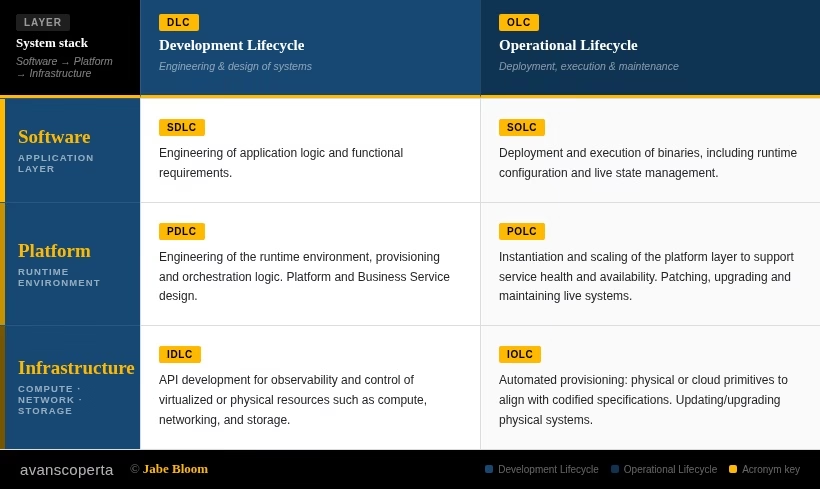
Just this brief expansion reveals a set of lifecycles often unexplored.
If we continue and layer in the multiple ontologies, epistemologies, and temporalities of the Three Economies framework, we arrive at a rich description of a complex interdependent sociotechnical system.
This reveals a frequent source of platform failure: optimizing exclusively for the development lifecycle, which externalizes unmanaged complexity onto Application, Platform, and Infrastructure Operators. To resolve this structural asymmetry, Platform and Infrastructure Developers must engage the domain requirements of adjacent and superjacent operational domains.
In this Complexity-Informed Platform Design Workshop, designed by Jabe Bloom, we’ll explore the importance of arriving at a new, more complex, and dynamic synthesis that rejects a purely structural, techno-centric view of software architecture in favor of an ongoing, multi-temporal, and deeply sociotechnical approach to platform design.
This Workshop is co-organized with KanDDDinsky Conference. 💚
Learning Objectives
By the end of this workshop, participants will be able to:
- Apply the Three Economies framework (Differentiation, Scale, and Scope) to evaluate and design platform capabilities that match organizational pace layers.
- Analyze the friction and misalignments between Development (DLC) and Operational (OLC) lifecycles across all three architectural layers and formulate a multi-temporal Strategic Design for the platform that treats live operational lifecycles (SOLC, POLC, IOLC) as first-class domain models, balancing immediate differentiation needs with long-term, systemic resilience.
- Evaluate architectural trade-offs, options, commitments, and the structural cost of change by designing and decomposing complex infrastructure primitives (e.g., Database-as-a-Service).
The Trainer
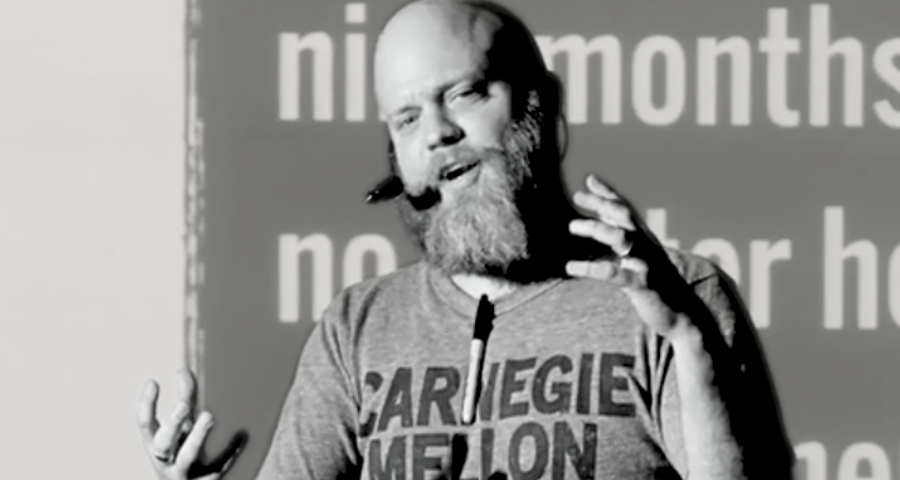
Dr. Jabe Bloom is a prominent figure in the intersection of philosophy, design, and management. With over 25 years of experience in the software industry – ranging from CTO roles to academic research – Jabe specializes in helping organizations understand the temporal and structural complexities of their systems.
Target Audience
This workshop is valuable for:
- Principal Architects, Systems Engineers, and Technical Directors tasked with mapping sociotechnical boundaries. It will prepare you to treat Application Operators, Platform Developers, Platform Operators, Infrastructure Developers, and Infrastructure Operators as Domain Experts within their respective spheres, and design systems that are highly operable.
- For executives who want to understand how to stop funding platform initiatives that optimize solely for deployment speed while passing the buck on operational drag, this workshop equips your technical leadership with a rigorous framework to eliminate structural asymmetry, reduce downstream operational costs, and align platform topology with actual business subdomains.
Prerequisites: no specific requirements are needed. Having familiarity with Team Topologies is a nice to have. Check the suggested readings in the F.A.Q. section.
Agenda
Day 1
The Three Economies Framework
- Exploring the dynamics of the Economies of Differentiation, Scope, and Scale
- Aligning pace layers, temporalities, and lifecycles.
The Platform Domain Canvas Context Mapping
- Practical evaluation of the Cognitive Dependency Mandate.
- Interactive Session: Utilizing the Platform Domain Canvas to map the six lifecycles and isolate systemic friction/translation drag.
Day 2
Service Architecture Lab (DBaaS Focus)
- Exploring patterns and principles for decomposing and laying out platform services.
- Examining the trade-offs different architectural decisions impose; calculating the cost of options, commitments, and change.
Red/Blue Team Simulation
- Deploying a Red/Blue team approach to evaluate platform robustness.
- Stress-testing multi-temporal platform designs against real-world systemic failures and sociotechnical boundaries.
How it works
This is an active, collaborative workshop; we’ll talk theory, but more importantly, we will play with it.
Participants utilize the Platform Domain Canvas to map their organization’s six lifecycles, exposing friction points and translation drag between development and operational domains.
We will design a series of services to understand the implications of the models. Using Database-as-a-Service, we’ll explore patterns and principles for decomposing and laying out a service. We’ll examine the trade-off different architectural decisions impose, and discuss the cost of options, commitments, and change.
Using a Red/Blue team approach, participants will stress-test their newly formulated, multi-temporal platform designs against real-world systemic failures and sociotechnical boundaries.
F.A.Q
How can I prepare to take the course?
We recommend two resources: