Understanding the systems you work on is challenging; furthermore, helping many people in your organisation have a somewhat consistent view of that same system is even more difficult. The knowledge and understanding of a system doesn’t happen all at once, and you can make it better by doing it as a practice.
Creating a system is a team sport, and whether you are part of a development team or leading teams, a great place to start is enhancing your skills with solo and collaborative modelling techniques that help you both Discover and Design software.
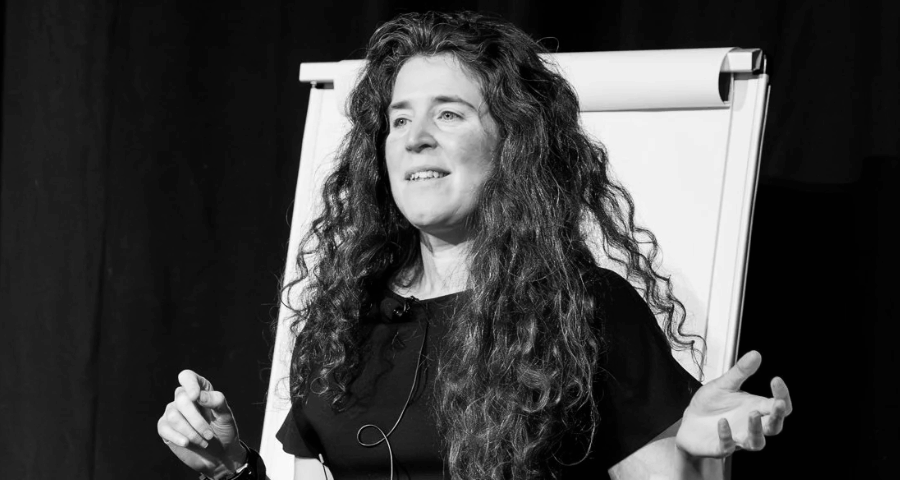
The Collaborative Modelling Workshop, led by Andrea Magnorsky, will teach you to model alone and with others, to visualise your system and create models that help you understand and communicate the current state, as well as design a future state that people understand.
In this workshop, you will use the Bytesize Architecture Sessions, a simple yet powerful modelling format. You will also practice the C4 model, an effective approach to software architecture diagramming.
Learning Objectives
At the end of the workshop, you will be able to:
- Create models alone and then integrate them to co-create models within a group;
- Use the C4 model that allows for modelling at different abstraction levels.
The Trainer
Andrea Magnorsky is the creator of Bytesize Architecture Sessions.
She is based in New Zealand and is well-known in the programming community for her contributions to functional programming and software architecture.
Target Audience
This workshop will be valuable to you if you:
- Work with or lead technical teams
- Lead teams that value effective time use and clarity when creating complex systems
- Want to create a practice that enables knowledge sharing and open communication.
It’s particularly beneficial for people in the following roles:
- Software Architects or people doing software architecture as part of their role
- Technical leads
- Product leaders
- Design leaders.
Agenda
This 3-half-day hands-on workshop enables participants to model using Bytesize Architecture Sessions through practical exercises with a fictional domain.
Participants will learn to create and review System context and container diagrams, applying these skills through collaborative exercises.
A business change scenario illustrates how architectural documentation evolves to meet changing requirements.
Session 1
- Modelling as a tool for thinking
- Bytesize Architecture Session – Learning about the fictional domain
- Bytesize Architecture Session – Create a System Context Diagram.
Session 2
- Review of the System diagram
- Bytesize Architecture Session – Create a Container Diagram
- Review the models.
Session 3
- The business changed requirements
- The business changed requirements
- Bytesize Session – Update the models.